- (619) 815 5317
- info@treeservicesandiegoca.net
- Mon - Sat: 9:00 - 19:00

Tree roots can sometimes become a concern when they remain after a tree has been removed, interfere with planned landscaping, or create problems in areas around a property. The appropriate approach depends on whether the roots belong to a living tree or are remnants of a tree that has already been removed.
Roots from a removed tree may remain underground even after stump grinding or stump removal. Depending on their size, location, and condition, selected roots may be removed when they interfere with landscaping, pathways, construction plans, or other intended uses of the area.
Extra care is necessary when roots belong to a living tree. Major root cutting can damage a tree, affect its health, and potentially reduce its structural stability. The tree and root location should therefore be evaluated before significant roots are cut or removed.
Tree root removal should be based on the individual situation rather than automatically removing every visible root. The goal is to address appropriate unwanted roots while considering nearby trees, structures, landscaping, soil conditions, and the future use of the area.
Tree root removal may be considered when roots remain after a tree has been removed or when unwanted roots interfere with the planned use or maintenance of an area. Large roots can remain beneath the soil long after the trunk and stump have been addressed.
Root removal may be useful when selected roots interfere with landscaping, planting areas, pathways, fences, or other property improvements. The size, location, condition, and source of the roots should be identified before work begins.
Visible roots from a living tree require more careful evaluation. Cutting significant roots can affect the tree’s health and stability, so removing them may not always be the appropriate solution.
If the root problem is connected to a tree that also needs pruning, inspection, stump work, or removal, our tree services can help determine the appropriate tree care for the property. To learn more, read about removing roots near hardscape or landscaping, why roots from a living tree need careful evaluation, and what to expect from tree roots after removal.
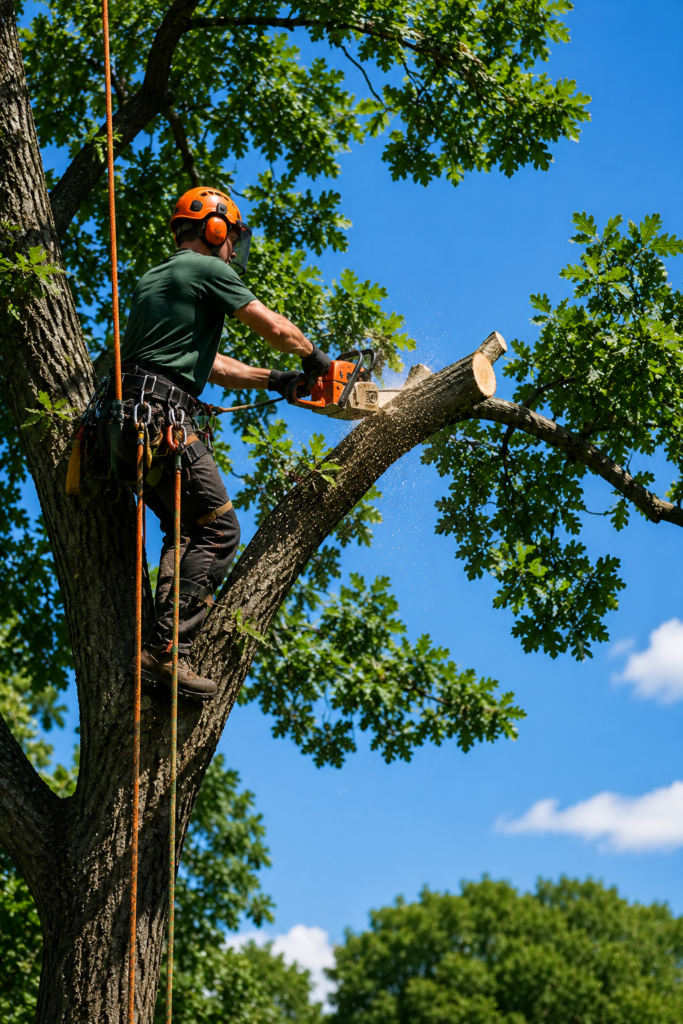
Tree root removal should begin by identifying where the roots originate and determining whether they belong to a living tree or a tree that has already been removed. This distinction is important because removing significant roots from a living tree can affect its health and structural stability.
For roots remaining after tree or stump removal, the surrounding soil may need to be carefully exposed so the size, direction, and location of the roots can be assessed. Selected roots can then be cut and removed where appropriate for the intended use of the area.
The process should account for nearby structures, fences, walkways, landscaping, irrigation components, utility areas, and other features that could be affected by excavation or root removal.
The approach to tree root removal in San Diego CA should depend on the individual site, root size and location, surrounding property, and whether any nearby living trees could be affected by the work.
Tree roots may be found near homes, garages, fences, walkways, driveways, patios, landscaped areas, and property boundaries. Before removing roots in these locations, it is important to determine where the roots originate and what could be affected by the work.
Roots associated with a living tree require particular care. Removing large or structurally important roots can damage the tree and may affect its stability, so root cutting should not be treated as an automatic solution simply because roots are visible near a structure or paved area.
Roots remaining from a previously removed tree can often be approached differently. Selected roots may be removed where appropriate to prepare an area for landscaping, improve access, or address other planned uses of the property.
Trees located in streets and public rights-of-way can have different maintenance considerations from trees on private property. Property owners can review the City of San Diego tree maintenance guidelines for information about street tree maintenance and related concerns.
Tree root removal can be needed on both residential and commercial properties, particularly when roots remain after a tree has been removed or interfere with the planned use and maintenance of an area.
At residential properties, unwanted roots may be found around yards, planting areas, fences, pathways, driveways, patios, and other landscaped spaces. The source and condition of the roots should be identified before deciding how they should be handled.
Commercial properties may have root concerns around landscaped areas, parking areas, walkways, property boundaries, access routes, and sections being prepared for future improvements or maintenance.
For homes and businesses, tree root removal in San Diego CA should be based on the individual site and performed with consideration for living trees, surrounding structures, landscaping, soil conditions, and other property features.